



This miso glazed salmon is tender, flaky, and coated in a caramelized Japanese glaze made from white miso paste, mirin, sake, honey, and sesame oil. The glaze takes two minutes to whisk together, the broiler does the rest, and the result is the kind of sticky, sweet-savory salmon you'd order at a Japanese restaurant - except you made it at home with five ingredients.
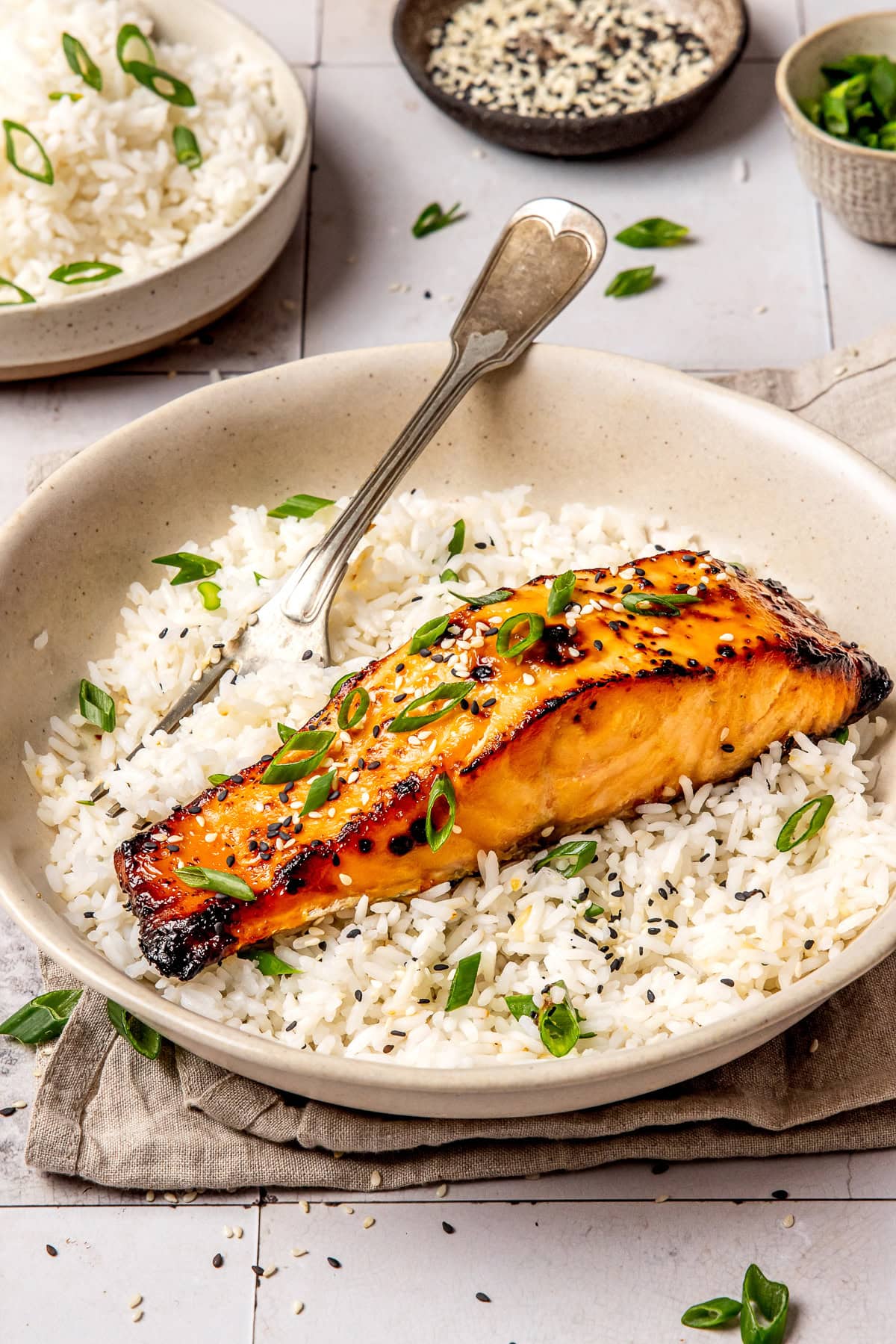
Miso glazed salmon is one of those recipes that gives you a lot of flavor for very little work. You whisk together a quick glaze, coat the fillets, let them marinate, and broil until the top turns glossy and caramelized.
The real key here is the marinating step - giving the salmon time to sit in the glaze overnight makes a massive difference in how much flavor the fish absorbs, and it also means dinner the next day is practically hands-off.
If you've tried my Creamy Miso Pasta or Creamy Miso Udon, you already know how much depth miso paste brings to a dish - and this recipe takes it in a completely different direction.
Miso Glazed Salmon Ingredients
Here's what you'll need to make this recipe:
- Salmon fillets: Two fillets, about 6 oz (170g) each, skin-on or skinless. Skin-on is my preference here since the salmon broils skin-side down - the skin acts as a barrier between the flesh and the baking sheet. Look for fillets of similar thickness so they cook evenly.
- White miso paste: The star of the glaze. White miso (shiro miso) is the mildest variety - slightly sweet, deeply savory, and packed with umami without being overpowering. You'll find it refrigerated at Asian grocery stores, usually near the tofu. Yellow miso works as a substitute but produces a stronger, earthier result, while red miso is the most intense of the three - if you use it, reduce the amount slightly since it's considerably saltier.
- Mirin: A sweet Japanese cooking wine that balances the saltiness of the miso and helps the glaze caramelize under the broiler. It's what gives the finished salmon that glossy, lacquered look. You can find mirin at most Asian grocery stores and in the international aisle of larger supermarkets.
- Sake: Adds subtle depth and rounds out the other flavors in the glaze. If you don't have sake, dry sherry works as a substitute, or you can use a splash of extra mirin instead.
- Honey: Just enough to tie the sweetness together and help the glaze adhere to the fish. Sugar works as a 1:1 swap.
- Sesame oil: Only a teaspoon, but it adds a warm, toasty aroma that rounds out the glaze. Use toasted sesame oil for the best result.
How to Make Miso Glazed Salmon
- Whisk the glaze together. Combine the white miso paste, mirin, sake, honey, and sesame oil in a small bowl and whisk until smooth. The miso can be a little stubborn at first, but it comes together quickly with some persistence.
- Marinate the salmon. Pat the fillets dry with a paper towel, then season lightly with salt and pepper. Place them in a shallow bowl or dish and pour the glaze over the top, turning each fillet so it's coated on all sides. Cover and refrigerate - at least 30 minutes if you're short on time, but 4 hours is ideal, and overnight gives you the best flavor. I always try to marinate mine the night before because the difference is noticeable and it makes the next day's dinner effortless.
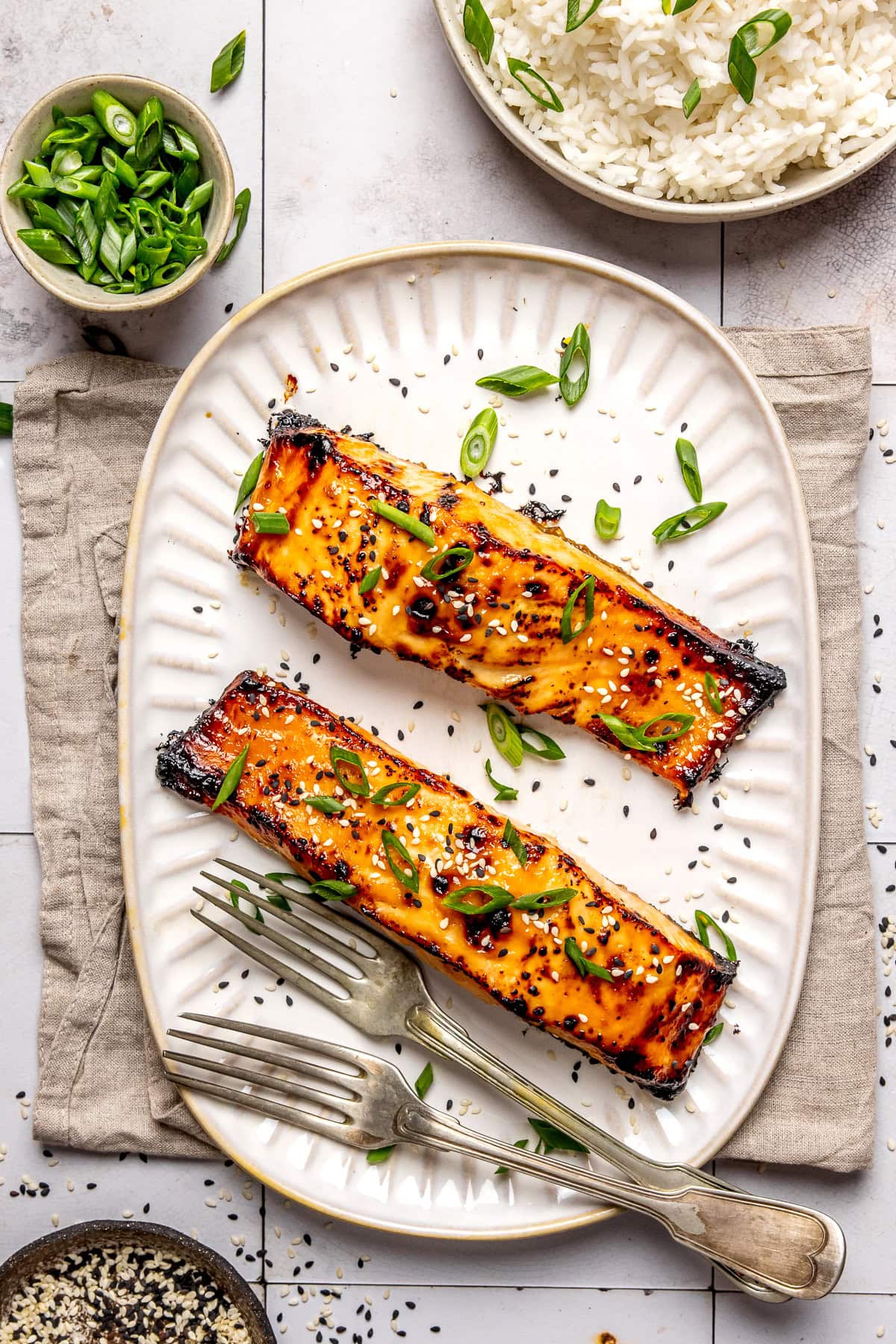
- Broil until caramelized. Preheat your broiler to high and line a baking sheet with parchment paper. Take the salmon out of the marinade and wipe off most of the excess - you want a thin, even coating rather than a thick layer. A thin layer caramelizes beautifully; too much miso tends to burn before the fish is cooked through. Place the fillets skin-side down and broil on the middle rack for about 9-10 minutes, checking at the 7-minute mark. The salmon is done when the glaze is bubbling and golden and the fish flakes easily when pressed.
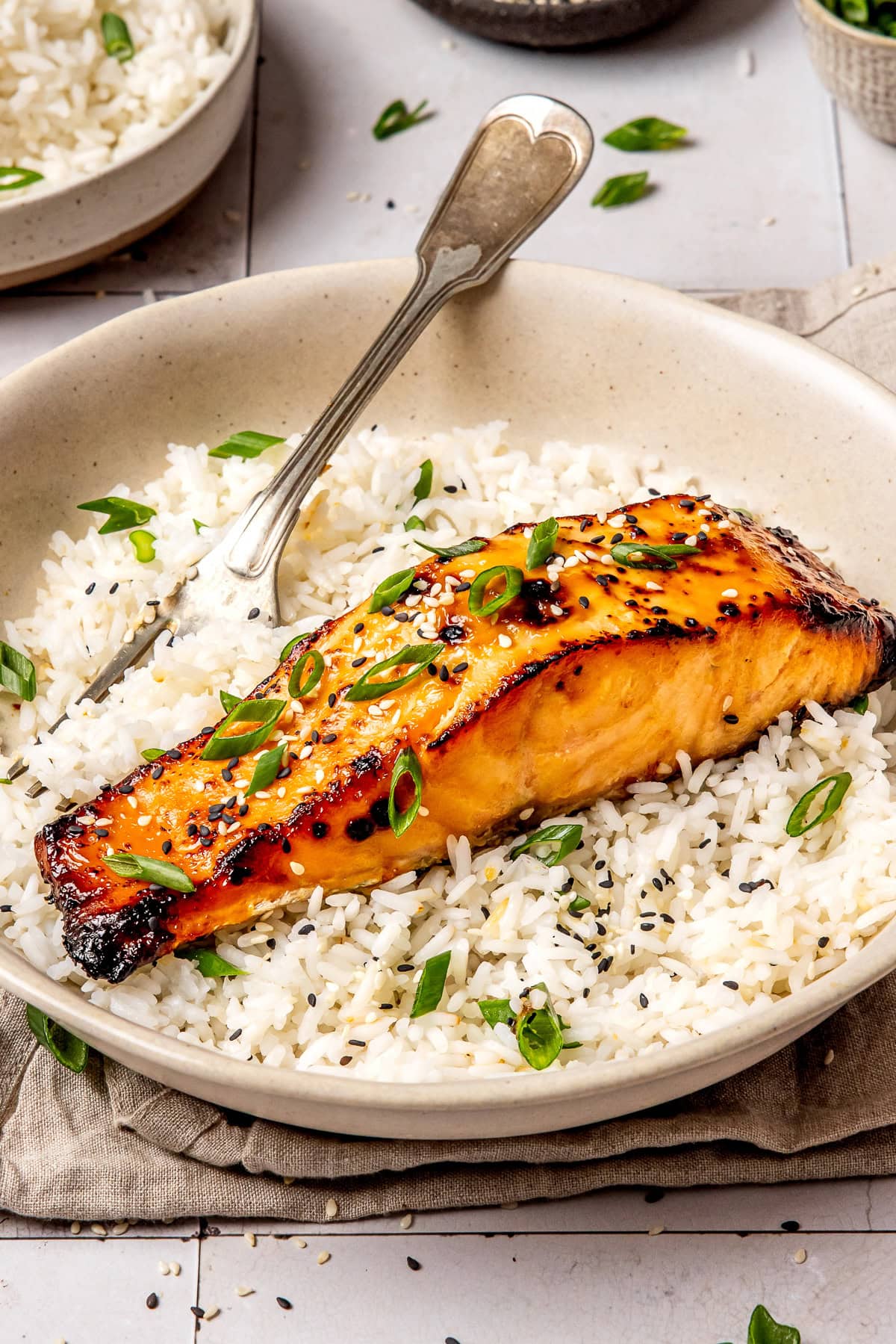
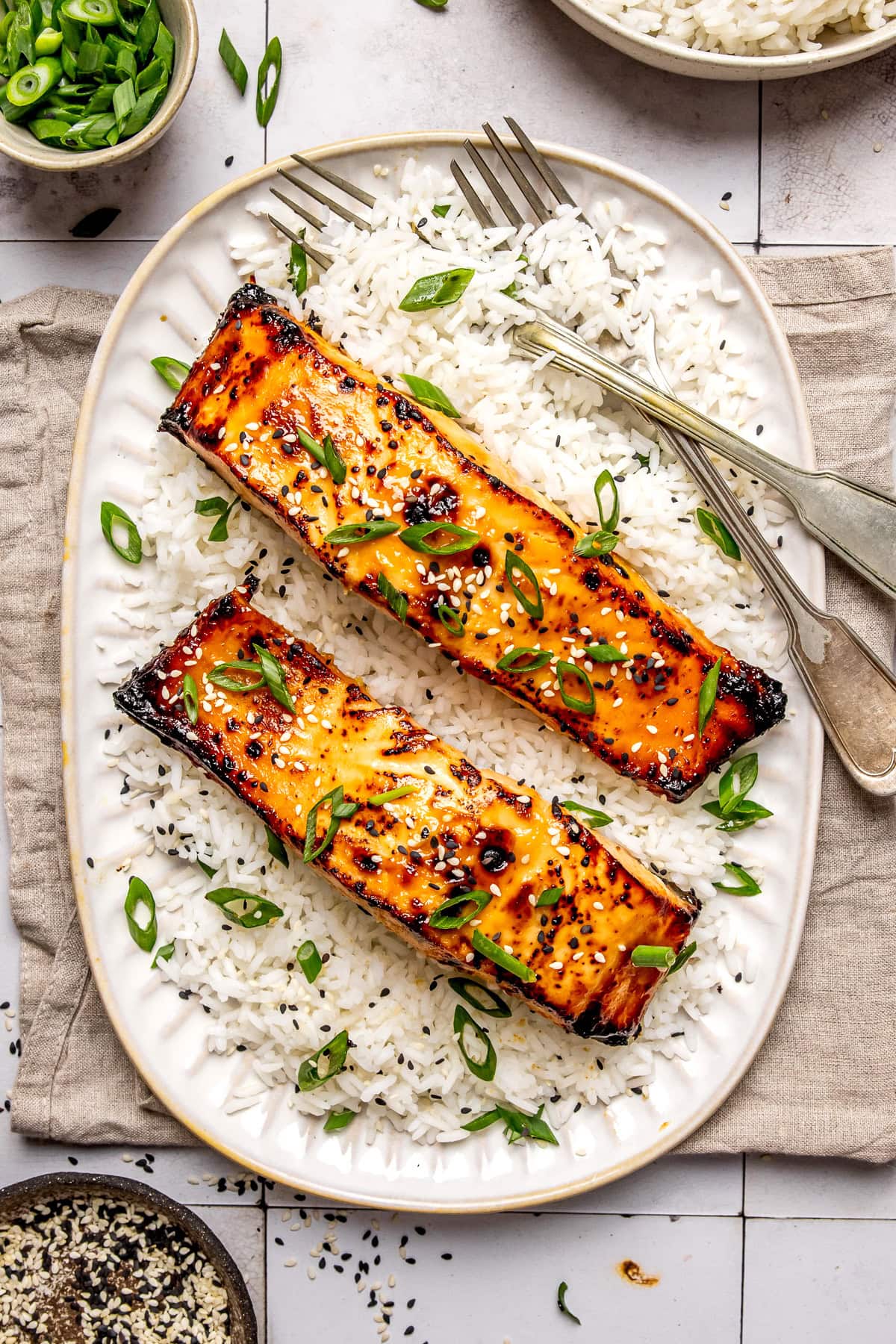
- Serve immediately. Plate the salmon over jasmine or short-grain rice, then garnish with sesame seeds and sliced green onions.
Tips & Notes
- Give the marinade time. Thirty minutes is the minimum, but 4 hours or overnight is where the flavor really develops. Marinating the evening before also means dinner the next day is almost no work - just line a baking sheet, broil, and eat.
- Wipe off the excess glaze before broiling. A thick coat of miso paste burns before the salmon finishes cooking, and the fish disappears under a dark crust. Wiping it down to a thin, even layer gives you a gorgeous caramelized surface while keeping the salmon visible and tender underneath.
- Watch the broiler closely. The sweet spot for me was 9 minutes on the middle rack, but broilers vary quite a bit. A thicker fillet might need the full 10 minutes, while a thinner one could be done sooner - so check at the 7-minute mark and go from there.
- Optional soy sauce for extra depth. If you want a slightly more savory glaze, add about ¼ teaspoon of soy sauce to the marinade. Keep it to that - this recipe is intentionally mild and miso-forward, and too much soy sauce easily overpowers the paste.
- Storage. Let the salmon cool completely, then refrigerate in an airtight container for up to 2 days. It reheats well in the oven or microwave, and also tastes great flaked over rice.
How to Serve Miso Glazed Salmon
- Over jasmine or short-grain white rice. This is the natural pairing - the rice catches any glaze that runs off and makes the meal feel complete. Short-grain rice in particular has a stickiness that works well with Japanese-style dishes like this.
- With sautéed vegetables. Bok choy or green asparagus tossed in a hot pan with a little sesame oil and salt is all you need. Quick, simple, and it balances out the richness of the salmon without competing with it.
- With a side salad dressed in Japanese sesame dressing. Something light and slightly nutty alongside the salmon is a great contrast. Bottled Japanese sesame dressing is easy to find at Asian grocery stores and most larger supermarkets - just toss it with mixed greens.
Variations
- Try it with cod. This glaze works beautifully on cod - it's a milder fish, so the miso flavor comes through even more. Since cod fillets are usually thinner, check from the 6-minute mark.
- Experiment with different miso. White miso keeps things mild and balanced, but yellow or red miso will give you a deeper, more intense result. Red miso in particular is noticeably saltier, so reduce the amount a little if you go that route.
- Air fryer method. If you prefer, cook the salmon in an air fryer at 400°F (200°C) for about 7-9 minutes. Make sure the fillets aren't overcrowded in the basket so the glaze can caramelize evenly.
- Make it gluten-free. Use tamari instead of soy sauce (if adding the optional splash), and double-check your miso paste - most are naturally gluten-free, but some brands include barley, so look for one that's labeled accordingly.
Frequently Asked Questions
At least 30 minutes, but 4 hours is the sweet spot and overnight (up to 24 hours) gives the best flavor. The longer the salmon sits, the more the miso infuses the fish. Don't go past 24 hours though - raw fish can start to degrade in quality beyond that.
Yes. White miso is the mildest and what this recipe is built around. Yellow miso produces a slightly stronger glaze, and red miso is the most intense - reduce the amount by about a quarter if you use it.
No. Some traditional recipes reduce the sake and mirin first, but here the alcohol cooks off naturally under the broiler. Skipping that step keeps things simpler and the result is just as good.
The glaze should be caramelized and bubbling, and the salmon should flake easily when pressed. For a more precise check, aim for 145°F (63°C) for fully cooked.
Yes - it keeps in the fridge for up to 3 days. You can also marinate the salmon overnight, which gives the best flavor and makes dinner the next day effortless.
Yes. Cod works well - it's milder, so the miso really shines. Check from the 6-minute mark since cod is typically thinner.
More Easy Salmon and Miso Recipes
If you loved this miso glazed salmon, here are a few more recipes to try:
Miso Glazed Salmon
Ingredients
- 2 tablespoons white miso paste
- 1 tablespoon mirin
- 1 tablespoon sake
- 1 tablespoon honey or sugar
- 1 teaspoon sesame oil
- 2 salmon fillets about 6 oz / 170g each, skin-on or skinless
Instructions
- Combine white miso paste, mirin, sake, honey, and sesame oil in a small bowl. Whisk until smooth.2 tablespoons white miso paste, 1 tablespoon mirin, 1 tablespoon sake, 1 tablespoon honey, 1 teaspoon sesame oil
- Pat the salmon fillets dry and season with salt and pepper. Place in a shallow dish and coat with the glaze, turning to cover all sides. Cover and refrigerate for at least 30 minutes, ideally 4 hours, or overnight for the best flavor (up to 24 hours).2 salmon fillets
- Preheat the broiler to high. Line a baking sheet with parchment paper. Wipe off most of the excess glaze from the salmon, leaving a thin, even coating. Place skin-side down on the baking sheet. Broil on the middle rack for 9-10 minutes until the glaze is caramelized and the salmon flakes easily. Check at the 7-minute mark.
- Plate over jasmine or short-grain rice and garnish with sesame seeds and sliced green onions.
Notes
- Marinating: 30 minutes is the minimum, but 4 hours is the sweet spot and overnight (up to 24 hours) gives the best result.
- Wipe off excess glaze: A thin, even coating caramelizes beautifully. A thick layer tends to burn before the salmon is cooked through.
- Broiler timing: Check at the 7-minute mark. The sweet spot is around 9 minutes on the middle rack, but this varies by broiler and fillet thickness.
- Miso options: White miso is ideal - mild and slightly sweet. Yellow miso works but gives a stronger, saltier result. Red miso is the most intense; reduce the amount slightly if using.
- Optional soy sauce: Add ¼ teaspoon of soy sauce to the glaze for extra depth. Don't exceed that - this recipe is intentionally miso-forward.
- Other fish: This glaze also works well on cod. Check from the 6-minute mark as cod is typically thinner.
- Storage: Cool completely and store in an airtight container in the fridge for up to 2 days.
Leave a Reply