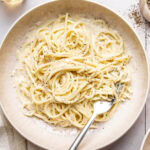
Cacio e Pepe
This cacio e pepe is the classic Roman pasta made with just three ingredients — spaghetti, Pecorino Romano, and plenty of freshly cracked black pepper. The starchy pasta water and finely grated pecorino emulsify into a silky, glossy sauce that coats every strand, with no cream and no butter needed.
Servings: 4 servings
Calories: 428kcal
Ingredients
- 12 ounces spaghetti
- 2 teaspoons black pepper coarsely ground, plus more to serve
- 4 ounces Pecorino Romano finely grated with a Microplane (about 4 cups lightly packed), plus more to serve
Instructions
- Bring a large pot of water to a boil and salt it lightly (pecorino is salty, so go easy here). Add the spaghetti and cook 1 minute less than the package al dente time, stirring occasionally. Make sure to keep plenty of the starchy cooking water.12 ounces spaghetti
- While the pasta cooks, grate the pecorino on a Microplane. The texture should be light and powdery, not clumped — this is what lets it melt into a smooth sauce.4 ounces Pecorino Romano
- Grind the black pepper coarsely into a small bowl, then add it to a large, dry skillet. Toast over medium heat for about 1 minute, swirling, until fragrant. Then turn the heat down to low.2 teaspoons black pepper
- With the heat on low, carefully ladle about ½ cup of the pasta water into the skillet. Make sure the pan is not too hot or the water will splash. Let it bubble gently for about 30 seconds.
- Use tongs to transfer the pasta directly from the pot into the skillet. Toss vigorously over low heat for 1–2 minutes, adding splashes of pasta water as needed. Taste a strand to check it is properly cooked before moving on.
- Take the skillet off the heat. Ladle about ½ cup of pasta water into a bowl and let it sit for a moment — it should not be piping hot, or the cheese will seize and turn lumpy. Whisk in all of the grated pecorino until you have a smooth, pourable cream, adding a splash more water if any lumps remain.4 ounces Pecorino Romano
- Pour the pecorino cream over the pasta and toss vigorously with tongs, adding splashes of pasta water as needed. Keep tossing until the sauce turns creamy and glossy and coats every strand, about 1 minute.
- Divide between bowls and finish with freshly cracked black pepper and extra grated pecorino. Serve right away. Enjoy!
Notes
- Pecorino or parmesan: Pecorino Romano is traditional and gives the dish its sharp, salty character. If you cannot find it, Parmigiano Reggiano works with the same technique — the flavor will just be milder. A 50/50 blend is also an option.
- Grate it finely: Pre-grated or coarsely grated cheese will not melt smoothly. A Microplane is the single biggest factor in whether the sauce comes together.
- Watch the temperature: The pan comes off the heat before the cheese goes in, and the water for the cream should cool for a moment first. Cheese plus boiling water equals clumps.
- Keep the pasta water: It is the only thing binding the sauce, so keep more than you think you need and add it gradually while tossing until the sauce clings to the pasta.
- Check the pasta before saucing: Once the pecorino cream goes in, the dish is finished — you cannot keep simmering to soften the pasta without breaking the sauce.
- Pasta shape: Spaghetti is what I use and it works beautifully. Tonnarelli is the classic Roman shape if you can find it, and bucatini works well too. Linguine or fettuccine are fine substitutes — just adjust the cooking time.
Nutrition
Serving: 1serving | Calories: 428kcal | Carbohydrates: 65g | Protein: 20g | Fat: 9g | Saturated Fat: 5g | Polyunsaturated Fat: 1g | Monounsaturated Fat: 2g | Cholesterol: 29mg | Sodium: 345mg | Potassium: 227mg | Fiber: 3g | Sugar: 2g | Vitamin A: 123IU | Calcium: 324mg | Iron: 1mg