


This cacio e pepe is the classic Roman pasta made with just three ingredients - spaghetti, Pecorino Romano, and plenty of freshly cracked black pepper. The starchy pasta water and finely grated pecorino emulsify into a silky, glossy sauce that coats every strand, with no cream and no butter needed.
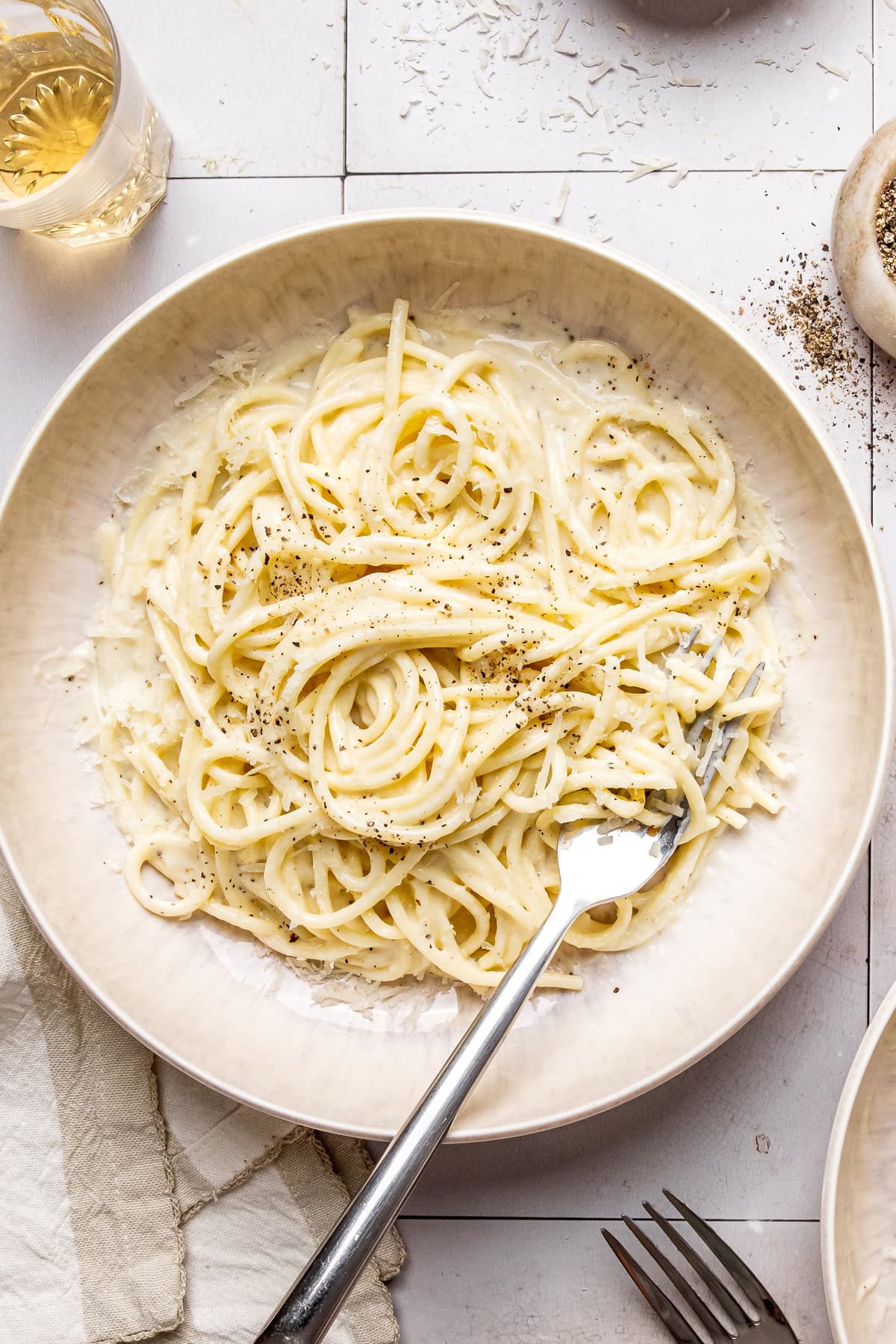
Cacio e pepe is the pasta I make when there is nothing in the fridge and I still want something that tastes like a real dinner. It is a Roman classic built on three ingredients I always have on hand, and the whole thing comes together in about twenty minutes, most of which is just waiting for pasta to cook.
What makes it work is not a long ingredient list but the technique - starchy pasta water and finely grated pecorino whisked into a cream that turns glossy the moment it hits the hot pasta. If you like simple Italian pasta dishes like my pasta alla norma or my lemon garlic pasta, this one belongs in the same rotation.
Cacio e Pepe Ingredients
Here's what you'll need to make this cacio e pepe recipe:
- Spaghetti: My choice for this dish and what I'd recommend. It's easy to find, it holds the sauce beautifully, and there's a reason it's one of the two shapes traditionally used for cacio e pepe in Rome. Tonnarelli is the other, and bucatini works too, but spaghetti gives you a great result with no hunting around. Whatever you use, go for a good-quality dried pasta - bronze-cut varieties have a rougher surface that helps the sauce cling.
- Pecorino Romano: The heart of the dish and the source of nearly all its flavor. It's a sharp, salty sheep's milk cheese, and it's what gives cacio e pepe its distinctive tang. Buy it in a block and grate it yourself on a Microplane - pre-grated cheese contains anti-caking agents that stop it from melting smoothly, which is the single most common reason this dish fails. If you can't find pecorino, Parmigiano Reggiano works with the same method, though the result will be milder and less sharp. A 50/50 blend of the two is a nice middle ground.
- Black pepper: Not a background seasoning here but a headline ingredient, so use whole peppercorns and grind them fresh on a coarse setting. Pre-ground pepper has lost most of its aromatic oils and will taste flat and dusty in a dish that leans on it this heavily. Two teaspoons sounds like a lot, and it is - that's the point.
- Pasta water: The unofficial fourth ingredient. As the spaghetti cooks it releases starch into the water, and that starch is what allows the cheese and water to emulsify into a sauce instead of separating into a greasy mess. Save more than you think you need.
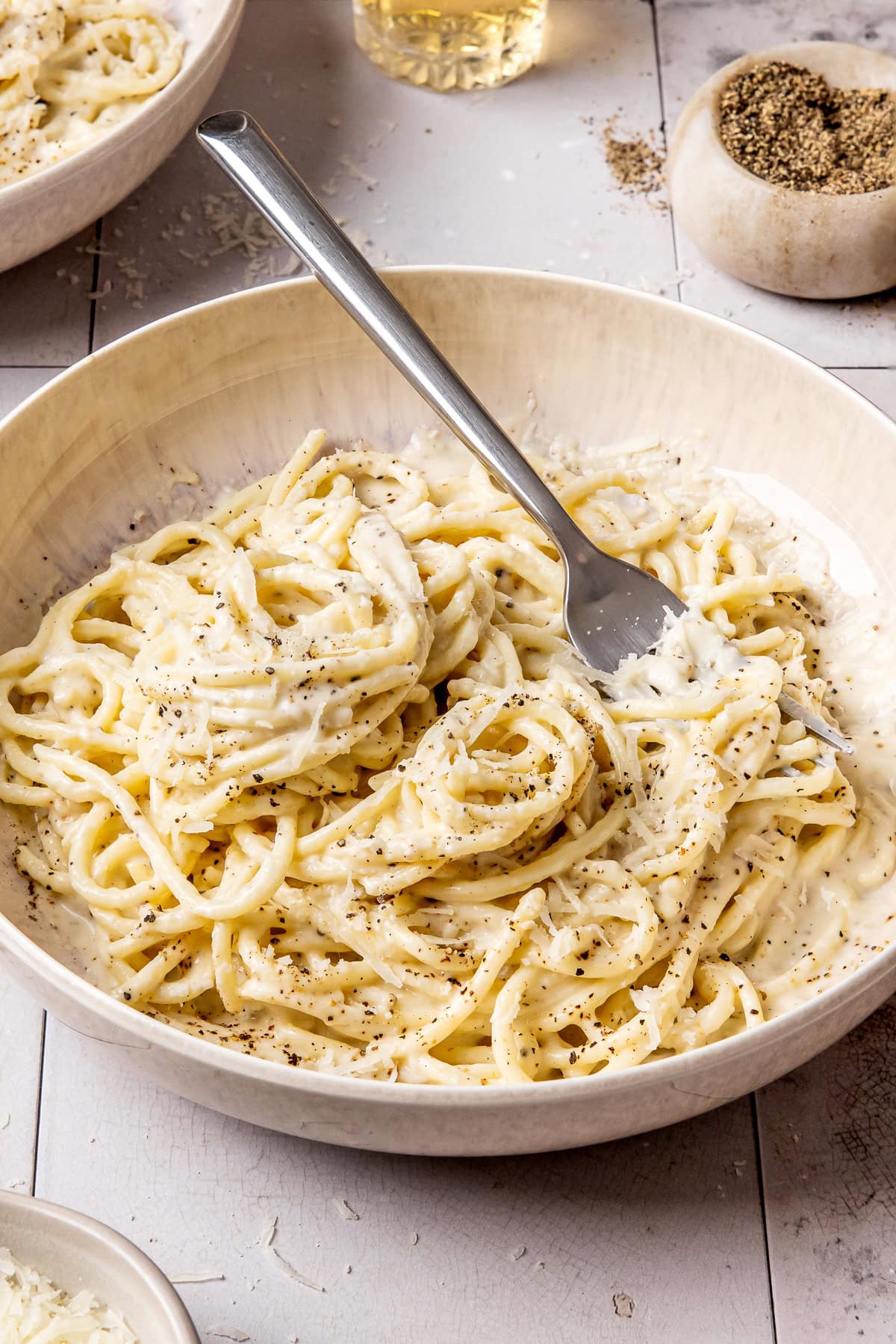
How to Make Cacio e Pepe
- Cook the pasta first. Bring a pot of water to a boil and salt it lightly, since pecorino is very salty. Add the spaghetti and cook one minute short of the package al dente time. Most importantly, keep plenty of the starchy cooking water - you'll need it twice.
- Grate the pecorino while the pasta cooks. Use a Microplane or the smallest holes on a box grater. It should look light and almost powdery, because coarse shreds won't dissolve.
- Toast the pepper. Grind the pepper coarsely into a small bowl, then add it to a large, dry skillet. Toast over medium heat for about a minute, swirling, until fragrant. Then turn the heat down to low - it makes the pepper taste rounder and less harsh.
- Build the pepper bath. With the heat on low, carefully ladle about half a cup of pasta water into the skillet. Let it bubble gently for thirty seconds.
- Finish the pasta in the pan. Use tongs to move the spaghetti into the skillet and toss over low heat for a minute or two, adding pasta water as needed. Then taste a strand - it should be al dente now, since once the cheese goes in there's no more cooking to be done.
- Make the pecorino cream. Take the skillet off the heat. Ladle about half a cup of pasta water into a bowl and let it sit briefly - warm, not piping hot, or the cheese will seize. Whisk in all of the pecorino until smooth.
- Emulsify. Pour the cream over the pasta and toss vigorously, adding pasta water bit by bit. After about a minute the sauce turns glossy and clings to the strands.
- Serve right away. Divide between bowls and finish with more cracked pepper and pecorino.
Tips & Notes
- Grate the cheese as finely as you possibly can. I know I've said this already, but it really is the difference between a silky sauce and a clumpy one. A Microplane is the right tool, and the cheese should look like a soft pile of snow rather than shreds.
- Watch your water temperature. This is where cacio e pepe most often goes wrong. Boiling water hitting pecorino will cause the proteins to tighten and separate immediately. Let the water cool for a moment off the heat before you whisk the cheese in, and make sure the pan is off the burner before the cream goes on the pasta.
- Use all the cheese in the cream. Rather than adding pecorino to the pan in stages, whisk the whole amount into the water first. It's more forgiving and gives you a smoother result, since you can fix any lumps in the bowl before it ever touches the pasta.
- Taste the pasta before you add the sauce. Once the pecorino cream goes in, the dish is essentially finished - you can't keep simmering it to soften the pasta without breaking the sauce. Check the texture at the end of step five.
- Keep the heat low when adding water to the pepper. A hot dry pan plus a ladle of water equals a lot of splashing. Turn the heat down first.
- Add pasta water gradually while tossing. The sauce should coat the strands rather than sit in a puddle. If it looks tight or claggy, another splash of water and more vigorous tossing will loosen it back into something glossy.
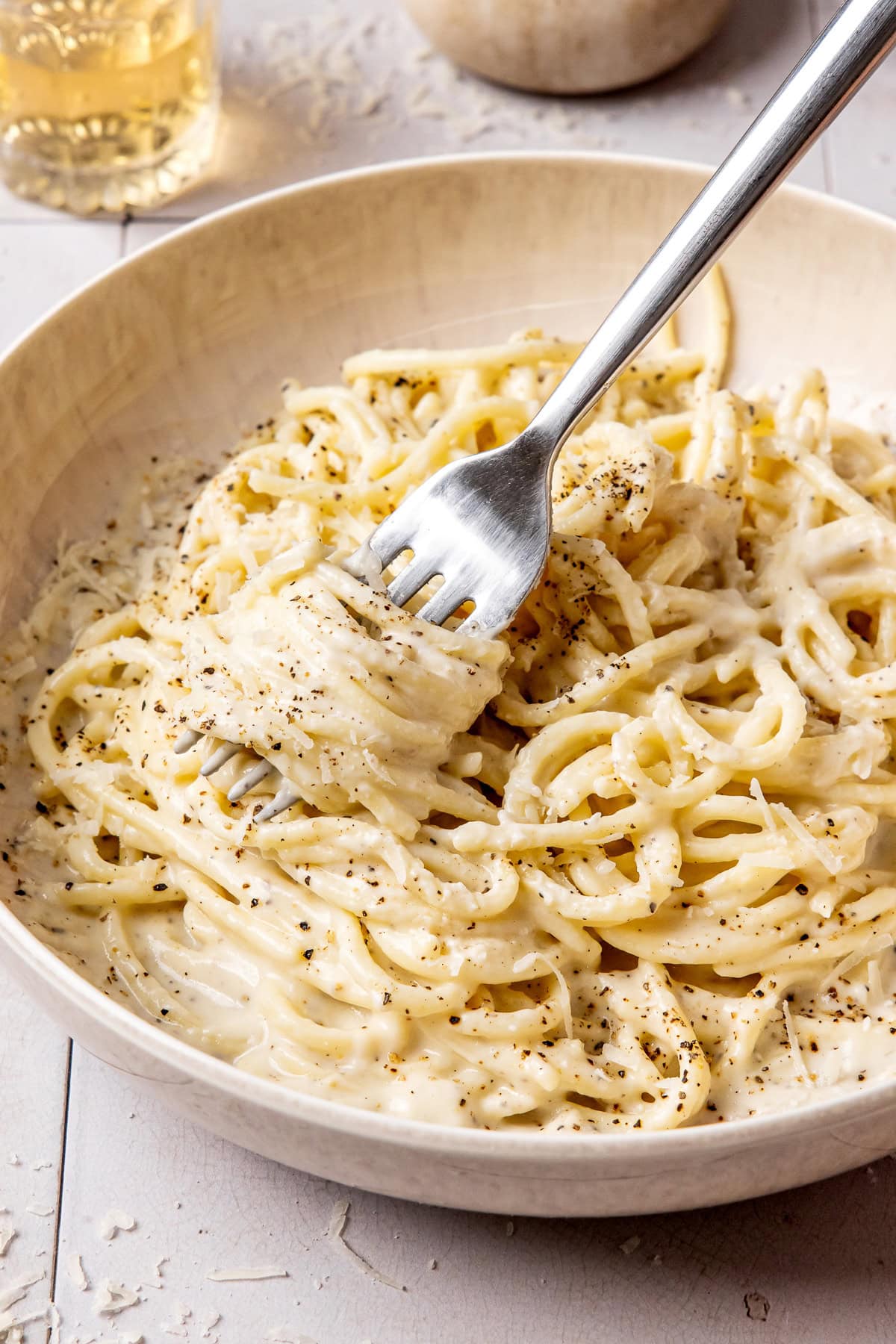
How to Serve Cacio e Pepe
- On its own, as a first course or a light dinner. This is how I eat it and how it's traditionally served in Rome - as a primo, in a modest portion, with nothing competing for attention. The dish is rich enough that a smaller serving goes a long way.
- With crusty bread. A slice of focaccia or ciabatta on the side is perfect for catching whatever sauce is left in the bowl.
- With a simple green salad. Peppery arugula dressed with lemon juice and olive oil cuts through the richness beautifully and takes two minutes to throw together.
Variations
- Add a protein. Cacio e pepe is a natural base for something simple alongside it - grilled chicken, seared shrimp, or a few meatballs turn it from a first course into a full dinner without changing the pasta itself.
- Swap the pasta shape. Spaghetti is what I use and it works perfectly, but tonnarelli is the other traditional Roman option and bucatini is nice if you like a chewier bite. Linguine and fettuccine work as well - just adjust the cooking time since thicker strands take longer.
- Use parmesan or a blend. Pecorino gives the sharpest, most authentic result, but Parmigiano Reggiano is a fine substitute if that's what you have. A mix of the two is milder than straight pecorino while still tasting distinctly of cacio e pepe.
- Dial the pepper up or down. Two teaspoons gives a noticeable but balanced heat. If you want the pepper to be the loudest thing in the bowl, go up to a tablespoon - and if you're pepper-shy, start with one teaspoon and add more at the table.
Frequently Asked Questions
Almost always temperature or grating. If the pasta water is too hot when it meets the cheese, the proteins seize and separate into clumps. Let the water cool briefly, take the pan off the heat, and make sure the pecorino is grated very finely on a Microplane.
Yes. Pecorino Romano is traditional and gives the dish its sharp, salty character, but Parmigiano Reggiano works with exactly the same technique. The flavor will be milder and less tangy. A 50/50 blend is a good compromise if you find straight pecorino too strong.
No. Real cacio e pepe uses only pasta, cheese, and pepper. The creaminess comes from the starch in the pasta water emulsifying with the cheese, not from dairy fat. Some recipes add butter as insurance, but the technique here doesn't need it.
Spaghetti is what I use and it's an excellent choice - easy to find and it holds the sauce well. Tonnarelli is the other traditional Roman option, and bucatini works nicely too. Whatever you choose, a bronze-cut dried pasta holds the sauce better than a smooth one.
Not really. The sauce is an emulsion that tightens and separates as it cools, so it's best eaten within minutes. If you do have leftovers, reheat them gently in a skillet with a splash of water, tossing constantly to bring the sauce back together.
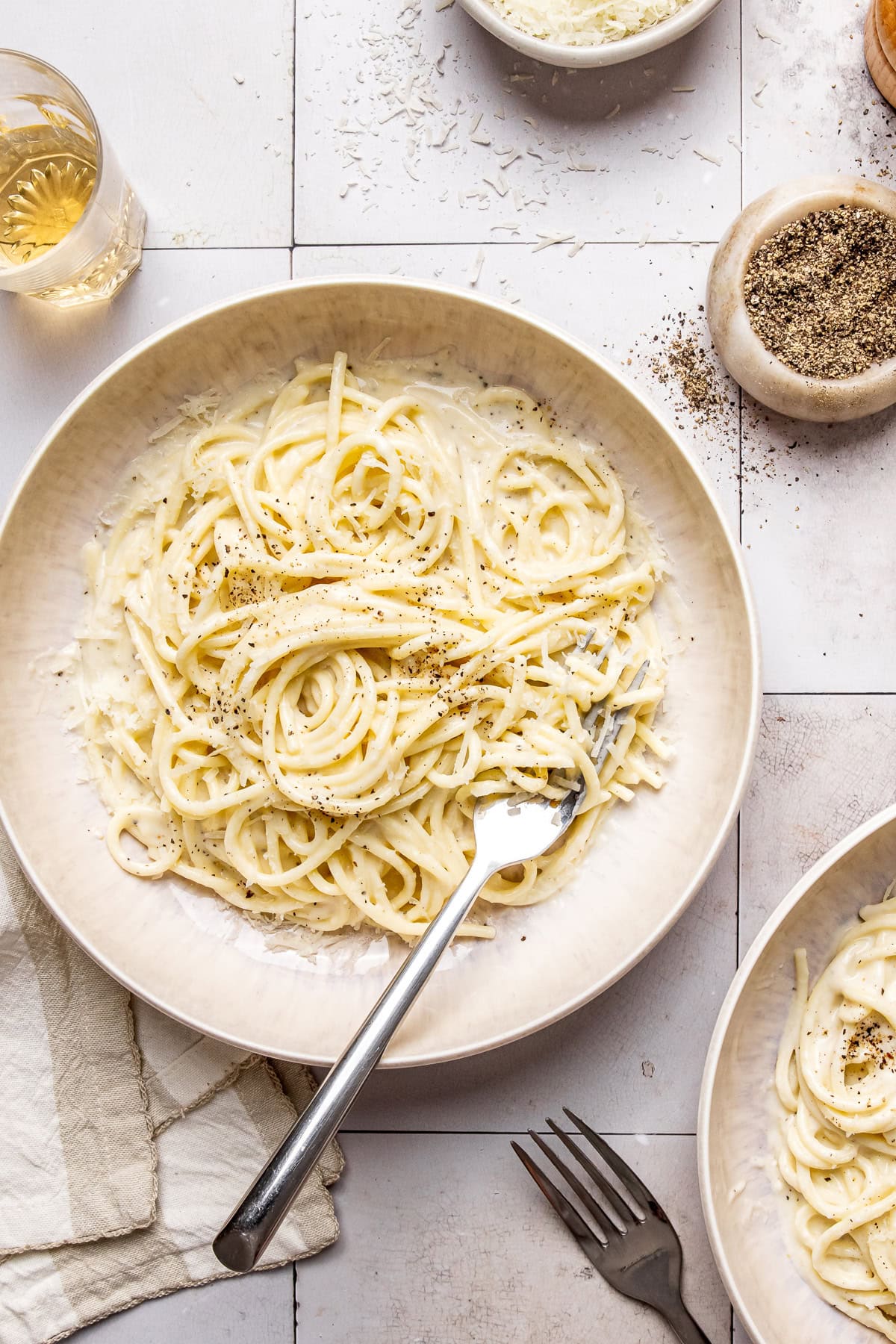
More Simple Italian Pasta Recipes
If you loved this cacio e pepe, here are a few more pasta recipes worth keeping in your rotation:
Cacio e Pepe
Ingredients
- 12 ounces spaghetti
- 2 teaspoons black pepper coarsely ground, plus more to serve
- 4 ounces Pecorino Romano finely grated with a Microplane (about 4 cups lightly packed), plus more to serve
Instructions
- Bring a large pot of water to a boil and salt it lightly (pecorino is salty, so go easy here). Add the spaghetti and cook 1 minute less than the package al dente time, stirring occasionally. Make sure to keep plenty of the starchy cooking water.12 ounces spaghetti
- While the pasta cooks, grate the pecorino on a Microplane. The texture should be light and powdery, not clumped - this is what lets it melt into a smooth sauce.4 ounces Pecorino Romano
- Grind the black pepper coarsely into a small bowl, then add it to a large, dry skillet. Toast over medium heat for about 1 minute, swirling, until fragrant. Then turn the heat down to low.2 teaspoons black pepper
- With the heat on low, carefully ladle about ½ cup of the pasta water into the skillet. Make sure the pan is not too hot or the water will splash. Let it bubble gently for about 30 seconds.
- Use tongs to transfer the pasta directly from the pot into the skillet. Toss vigorously over low heat for 1-2 minutes, adding splashes of pasta water as needed. Taste a strand to check it is properly cooked before moving on.
- Take the skillet off the heat. Ladle about ½ cup of pasta water into a bowl and let it sit for a moment - it should not be piping hot, or the cheese will seize and turn lumpy. Whisk in all of the grated pecorino until you have a smooth, pourable cream, adding a splash more water if any lumps remain.4 ounces Pecorino Romano
- Pour the pecorino cream over the pasta and toss vigorously with tongs, adding splashes of pasta water as needed. Keep tossing until the sauce turns creamy and glossy and coats every strand, about 1 minute.
- Divide between bowls and finish with freshly cracked black pepper and extra grated pecorino. Serve right away. Enjoy!
Notes
- Pecorino or parmesan: Pecorino Romano is traditional and gives the dish its sharp, salty character. If you cannot find it, Parmigiano Reggiano works with the same technique - the flavor will just be milder. A 50/50 blend is also an option.
- Grate it finely: Pre-grated or coarsely grated cheese will not melt smoothly. A Microplane is the single biggest factor in whether the sauce comes together.
- Watch the temperature: The pan comes off the heat before the cheese goes in, and the water for the cream should cool for a moment first. Cheese plus boiling water equals clumps.
- Keep the pasta water: It is the only thing binding the sauce, so keep more than you think you need and add it gradually while tossing until the sauce clings to the pasta.
- Check the pasta before saucing: Once the pecorino cream goes in, the dish is finished - you cannot keep simmering to soften the pasta without breaking the sauce.
- Pasta shape: Spaghetti is what I use and it works beautifully. Tonnarelli is the classic Roman shape if you can find it, and bucatini works well too. Linguine or fettuccine are fine substitutes - just adjust the cooking time.
Leave a Reply