



This creamy gochujang shrimp pasta is a rich and spicy fusion dish that combines tender shrimp with a luscious, gochujang-based cream sauce for the perfect balance of heat and comfort. It's incredibly flavorful, comforting, and comes together easily for a delicious twist on your usual pasta night.

This creamy gochujang shrimp pasta is a rich, comforting, and delicious fusion dish that brings together the bold, spicy flavors of Korean gochujang with a silky, luscious cream sauce. The tender shrimp and perfectly cooked pasta make it the kind of meal you'll want to come back to again and again.
If you love cozy and satisfying dishes like this, be sure to try my creamy miso udon or chicken katsu curry-they're packed with flavor and perfect for a comforting dinner at home.
Creamy Gochujang Shrimp Pasta Ingredients
To make this creamy gochujang shrimp pasta, you'll need the following ingredients:
- Shrimp: Jumbo shrimp work best for this dish, as they stay juicy and tender when cooked. They also add a nice bite and pair really well with the creamy, spicy sauce.
- Pasta: Linguine is a great choice because its flat shape holds the sauce nicely, but feel free to use any pasta you like or have on hand. Long pasta shapes tend to work best here.
- Aromatics: Shallots and garlic form the flavor base of the sauce, adding depth and a subtle sweetness. Make sure to cook them gently to avoid browning, which can overpower the dish.
- Mushrooms: Mushrooms add an extra layer of texture and earthy flavor that complements the creaminess of the sauce. You can use a mix of different types for more depth-button, cremini, or shiitake all work well.
- Gochujang: Gochujang is the heart of this dish, bringing bold, spicy, and slightly sweet flavors. Choose a mild or medium-hot version depending on your spice preference-most Asian grocery stores carry several options.
- Seasonings: Paprika powder is used to season the shrimp, giving it a warm, smoky note. Red pepper flakes are optional but great if you want to add a bit more heat on top of the gochujang.
- Sauce: A combination of heavy cream (or a lighter cream if preferred) and pasta water creates a silky, rich sauce that clings to the pasta beautifully. The starch from the pasta water helps bring everything together.
- Parmesan cheese: Parmesan adds a salty, umami-rich layer to the sauce that enhances all the other flavors. It melts in smoothly and rounds out the dish nicely.
- Basil leaves: Fresh basil adds a burst of freshness and aroma that balances the richness of the sauce. Just a few leaves go a long way.
- Lemon: A squeeze of lemon juice at the end is optional, but it really helps to brighten up the dish. It adds a little acidity that cuts through the creaminess in a really pleasant way.

How to make this creamy gochujang shrimp pasta
- Marinate the shrimp: First, place the shrimp in a bowl and add all the marinade ingredients. Toss until combined.
- Sear the shrimp: Next, preheat some olive oil in a pan over medium heat. Add the shrimp and sear from both sides until cooked, around 3-4 minutes. Then remove the shrimp from the pan.
- Sauté the mushrooms and aromatics: Next, add the mushrooms and sear until browned. Then add the shallot and garlic. Season with some salt and pepper. Then sauté until fragrant.
- Cook the pasta: In the meantime, start preparing the pasta according to the package instructions. Cook the pasta for 1-2 minutes less than the package states. Then save some pasta water, drain, and set aside.
- Prepare the sauce: Add the gochujang, heavy cream, pasta water, parmesan cheese, and red pepper flakes (optional) to the pan. Season with more black pepper to taste. Stir and simmer for a few minutes.
- Combine: Add the cooked pasta and fresh basil to the pan. Toss and continue to cook until the sauce clings to the pasta. Add a squeeze of lemon juice for more balance (optional). Use more pasta water if needed.
- Serve: Garnish with more basil and parmesan cheese and enjoy!

Tips & Notes
- Be careful with salt: Gochujang is naturally salty, so it's best to hold off on adding salt until the end. You can add a tiny amount when sautéing the vegetables, but always taste the sauce first before seasoning-it's easy to overdo it.
- Adjust the spice level to your taste: Gochujang already brings a good amount of heat, but if you like things spicier, feel free to add a pinch of red pepper flakes. Or leave them out if you prefer a milder version.
- Use pasta water to bring the sauce together: Pasta water helps the cream and gochujang blend into a smooth, silky sauce that clings perfectly to the noodles. Add it gradually until you reach your desired consistency.
- Don't skip the parmesan and basil: These two ingredients might seem small, but they really elevate the dish. Parmesan adds depth and umami, while basil brings a fresh contrast to the rich sauce.
- Cook the pasta until just al dente: Since the pasta finishes cooking in the sauce, make sure to drain it while it's still slightly firm. This way, it won't get mushy and will absorb the flavors better.

Variations
- Make it lighter: For a lighter version, you can use a reduced-fat cream or even a mix of milk and a splash of cream. It'll still be creamy and flavorful but a bit easier on the richness.
- Switch up the mushrooms: I used cremini mushrooms for their earthy flavor, but other varieties like king oyster, shiitake, or even enoki work beautifully. Feel free to mix and match based on what you have.
- Add more vegetables: You can easily add more veggies to this dish-zucchini, spinach, or even bell peppers go well with creamy sauces and help balance out the richness. Just sauté them with the mushrooms and aromatics for best flavor.
Frequently Asked Questions
Yes, you can substitute the shrimp with chicken, tofu, or even thinly sliced beef. Just adjust the cooking time as needed for your chosen protein.
The heat level of gochujang depends on the type you buy-some are quite mild while others are spicier. I recommend using a medium-hot or mild version, as it still adds plenty of flavor, sweetness, and depth without overpowering the dish.
Yes, simply use a mild gochujang and skip the red pepper flakes. You can also add a bit more cream to mellow out the heat.
Heavy cream makes the richest sauce, but you can also use a lighter cream or a mix of milk and cream if you want to reduce the richness. I often combine milk and heavy cream for a lighter option.
This dish is best enjoyed fresh, but you can store leftovers in the fridge for up to 2 days. Reheat gently with a splash of cream or milk to loosen the sauce.
Yes, linguine works well, but fettuccine, spaghetti, or even short pasta like penne can also be used.
Cremini mushrooms add a nice earthy flavor, but king oyster and enoki mushrooms are also excellent choices. You can use one type or combine a mix for more variety and texture-shiitake works too if you prefer a deeper, woodier flavor.
Absolutely. Zucchini, spinach, or bell peppers go well in creamy sauces and can be sautéed along with the mushrooms.
Parmesan adds great flavor and depth to the sauce. It helps balance the creaminess and spice. So I highly recommend using it.
Gochujang is already salty, so it's best to taste the sauce before adding any salt. Only a small amount may be needed, if at all.

More easy and delicious pasta recipes
If you love a flavorful and comforting pasta dinner, be sure to check out the following recipes:
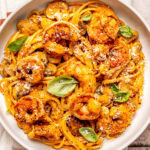
Creamy Gochujang Shrimp Pasta
Ingredients
Shrimp Marinade
- ½ pound shrimp peeled and deveined
- ½ teaspoon paprika powder
- salt and pepper to taste
- ½ tablespoon extra virgin olive oil
Creamy Gochujang Sauce
- 1 tablespoon extra virgin olive oil
- 2 cups mushrooms of choice sliced
- 1 shallot finely diced
- 2 garlic cloves minced
- salt and black pepper to taste
- 6 ounces linguine
- 2 tablespoons gochujang
- ¾ cup heavy cream or a lighter cream option
- ¼ cup pasta water more as needed
- 2 tablespoons grated parmesan cheese
- ½ teaspoon red pepper flakes (optional) only if extra spice is needed
- 1 handful fresh basil leaves torn
- squeeze of lemon juice (optional, for balance)
Instructions
- First, place the shrimp in a bowl and add all the marinade ingredients. Toss until combined.½ pound shrimp, ½ teaspoon paprika powder, salt and pepper, ½ tablespoon extra virgin olive oil
- Next, preheat some olive oil in a pan over medium heat. Add the shrimp and sear from both sides until cooked, around 3-4 minutes. Then remove the shrimp from the pan.1 tablespoon extra virgin olive oil
- Next, add the mushrooms and sear until browned. Then add the shallot and garlic. Season with some salt and pepper. Then sauté until fragrant.2 cups mushrooms of choice, 1 shallot, 2 garlic cloves, salt and black pepper
- In the meantime, start preparing the pasta according to the package instructions. Cook the pasta for 1-2 minutes less than the package states. Then save some pasta water, drain, and set aside.6 ounces linguine
- Add the gochujang, heavy cream, pasta water, parmesan cheese, and red pepper flakes (optional) to the pan. Season with more black pepper to taste. Stir and simmer for a few minutes.2 tablespoons gochujang, ¾ cup heavy cream, ¼ cup pasta water, ½ teaspoon red pepper flakes (optional), 2 tablespoons grated parmesan cheese
- Add the cooked pasta and fresh basil to the pan. Toss and continue to cook until the sauce clings to the pasta. Add a squeeze of lemon juice for more balance (optional). Use more pasta water if needed.1 handful fresh basil leaves, squeeze of lemon juice (optional, for balance)
- Garnish with more basil and parmesan cheese and enjoy!
Notes
- I recommend adding salt only after tasting the sauce. Gochujang is already quite salty, so I usually don't add any additional salt when making this dish.
Leave a Reply